About AHA

Enabling, strengthening and amplifying India’s ageing ecosystem

The Association for Healthy Ageing is a collective of organizations and stakeholders across longevity science, healthy lifestyles, elder healthcare and dementia care — brought together under a unified banner.

Our purpose

Unified voice of organizations committed to healthy Ageing of every Indian

AHA purpose statement

AHA is a collaborative platform — the unified voice that India’s longevity ecosystem lacks. It brings together service providers, innovators, policymakers, researchers and the private sector under one roof.

The Association aims to build bridges across disciplines and sectors, so that as India’s population ages, the systems that support them are strong, inclusive and future-ready.

The context

A country ageing faster than its systems

India is undergoing a rapid demographic transition. By 2036, nearly one in seven Indians will be 60 or older — and the systems designed to support them were built for a much younger country.

The older adult population is projected to grow from 100 million in 2011 to 230 million by 2036. Southern states such as Kerala, Goa and Tamil Nadu already report the highest older adult proportions and old-age dependency ratios in the country, which means India’s national response needs to start from the South.

Indian elders face multiple, compounding challenges: low literacy, financial insecurity, high economic dependency, and an increasing burden of chronic conditions such as hypertension, diabetes and cognitive decline.

The Longevity: A New Way of Understanding Ageing report — commissioned by Rohini Nilekani Philanthropies, Ashoka and Dalberg in 2025 — previews what is coming. India’s older adult population will reach 300 million by 2047 and become the largest in the world by 2067.

Sources

  • Longevity: A New Way of Understanding Ageing — Rohini Nilekani Philanthropies, Ashoka and Dalberg, 2025
  • United Nations Population Division
  • Subaiya, Lekha and Dhananjay W Bansod (2011). Demographics of Population Ageing in India: Trends and Differentials. BKPAI Working Paper No. 1, UNFPA
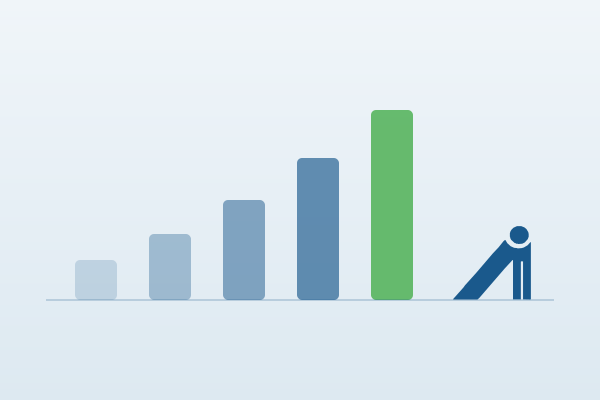
Illustration of a rising sequence of columns representing India's growing older population
India’s 60+ population: 70.6 million in 2001, 100 million in 2011, crossing 173 million by 2026, 230 million by 2036 and around 300 million by 2047.

58 years

Healthy life expectancy, against a life expectancy of 73 — a 15-year gap of ill-health.

Under 5%

Of older Indians belong to any formal social organization.

Why AHA was created

The sector had everything except connective tissue

The same 2025 report identifies a critical structural gap: the civil society response to ageing is fragmented, underfunded, and lacks connective tissue.

Under-resourced

The median annual budget of leading ageing-focused NGOs is under ₹1 crore, even after two decades of operations.

Siloed advocacy

Advocacy is siloed, leaving longevity and ageing policy reform without a unified national voice.

Scale-up remains elusive

Proven community care models rarely travel beyond the demonstration sites that created them.

No shared platform

Research, practice, policy and industry had no common ground on which to meet, learn and act together.

Our role

AHA does not replace its members. It multiplies them.

AHA aspires to enable, strengthen and amplify the work of organizations already creating impact across the country. Its focus is not on addressing gaps that are already being adequately serviced by member organizations.

Enable

Creating the shared infrastructure — knowledge, standards, convening power — that individual organisations cannot build alone.

Strengthen

Building organisational capacity, competency frameworks and quality standards across the ecosystem.

Connect

Building bridges across disciplines and sectors — between People & Community, Government & Policy, and Infrastructure & Institutions — so evidence, practice and policy meet.

Amplify

Identifying, documenting and showcasing successful models so that what works in one place can be adopted in many.

How AHA works

Five roles the Association will serve

AHA is a collective of organizations and stakeholders across longevity science, healthy lifestyles, elder healthcare and dementia care. Under that unified banner, it will serve as:

  1. A platform for integrated care

    Advancing integrated care for older adults across the full continuum of ageing and cognitive health.

  2. A platform for healthier lifestyles

    Improving the lifestyles that promote healthy ageing in younger and middle-aged adults, long before older age begins.

  3. A thought leadership hub

    A knowledge resource driving evidence-based strategies and innovation across the ecosystem.

  4. A catalyst for collaboration

    Driving joint advocacy, capacity building and scalable programme collaboration between members and partners.

  5. A structured interface with government

    Engaging meaningfully with government bodies, policymakers and regulators on behalf of the wider ecosystem.

Collaborative philosophy

People & Community × Government & Policy × Infrastructure & Institutions

Healthy ageing spans healthcare, dementia, caregiving, financial security, social inclusion, workforce participation, housing, technology and research. AHA’s role is to bring together People & Community, Government & Policy, and Infrastructure & Institutions — leveraging the strengths of Vayah Vikas, Dementia India Alliance, Longevity India and others.

People & Community

Civil society and communities

Service providers, community organisations, caregivers and older adults themselves — the organisations already creating impact whose work AHA exists to enable, strengthen and amplify.

Government & Policy

Government and policymakers

National and state governments, regulators and policy institutions, engaged through a structured interface that carries collective evidence into policy and systems change.

Infrastructure & Institutions

Industry, innovators and private sector

Innovators, AgeTech developers, healthcare providers, philanthropies and industry partners whose capability and capital create pathways for replication, adoption and scale.

Governance & Leadership

Board of Trustees

The Association for Healthy Ageing is guided by distinguished healthcare leaders, gerontologists, scientists, and senior care pioneers committed to transforming India’s longevity ecosystem.

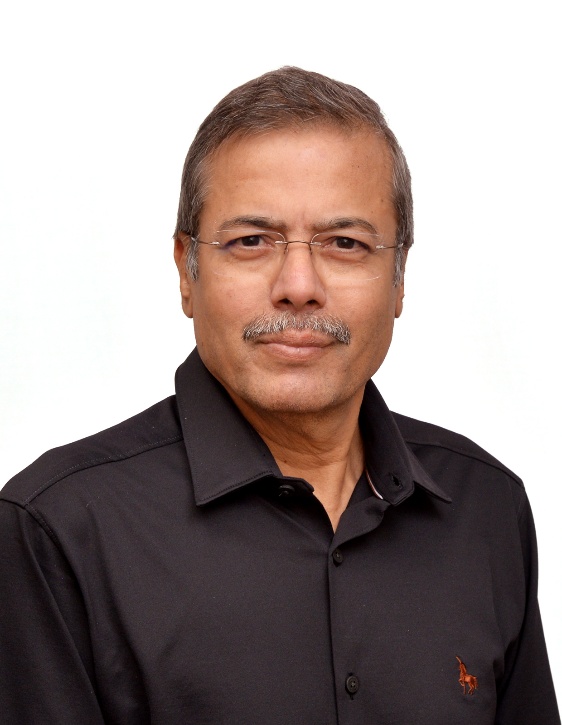
Shyam Viswanathan — Chairperson & President

Shyam Viswanathan

Chairperson & President

Co-Founder of Dementia India Alliance (DIA) and Patron of Shraddha Maanu Foundation.

Shyam is an Electrical Engineer and an MBA from the Faculty of Management Studies of Delhi University. He has more than 4 decades of experience in configuring and delivering solutions to large corporations in India, W. Europe, Asia Pacific as well as the United States in areas as diverse as Process Design, Knowledge Management and Technology Based Training.

He is a Consultant and Faculty in Leadership of Self & Teams; Innovation & Design Thinking; Vision & Culture; Change & New Initiatives. He has been a Subject Matter Expert with SHRM and an empanelled Faculty with Harvard Business School Publishing.

As the first Dean of Executive Education at the Indian School of Business, Hyderabad – he set up the Executive Education practice of the school.

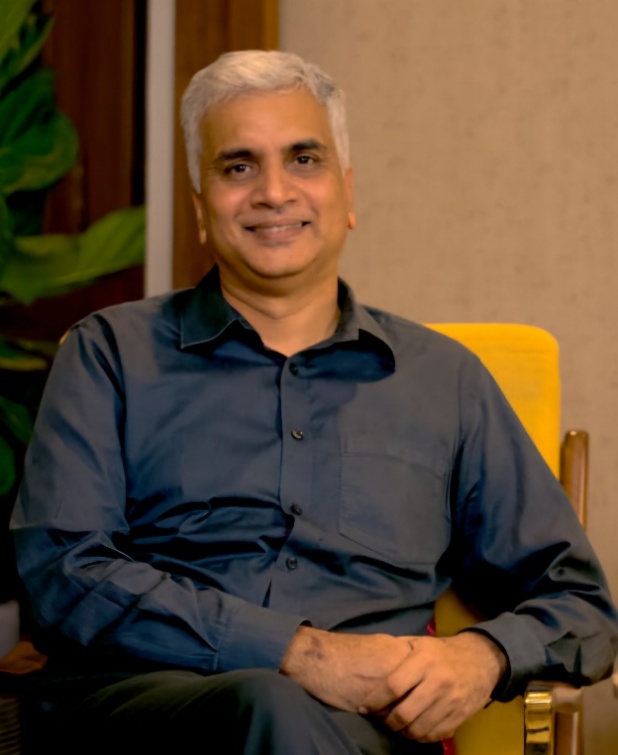
Dr. Deepak Saini — Vice Chairperson

Dr. Deepak Saini

Vice Chairperson

A leading researcher in the biology of aging in India. As Head of the SAInI Laboratory (Signaling in Aging, Inflammation, and Infection) at the Indian Institute of Science (IISc), his primary focus in geroscience is understanding the molecular mechanisms driving cellular aging, inflammation, and tissue degeneration.

Key research focus areas include investigations into drug-target class called GPCRs, and how cell-surface signaling cascades change as cells undergo senescence (aging). Deepak also works to identify molecules regulating DNA damage response (DDR) pathways that initiate and maintain the senescent cell state, as well as intrinsic anti-aging mechanisms triggered by cellular stress. Another area of investigation uses live-cell imaging, multi-omics (transcriptomics, proteomics, metabolomics), and 3D cell culture models to explore “inflammaging” – the chronic, low-grade inflammation associated with getting old – and how aged cells alter tissue microenvironments.

Beyond basic research, Deepak serves as the convener and faculty coordinator for IISc’s Longevity India Initiative. In this role, he leads efforts to advance healthy aging research across India – bridging multi-disciplinary scientific discoveries with clinical partnerships, to identify biomarkers of aging and extend human health span.

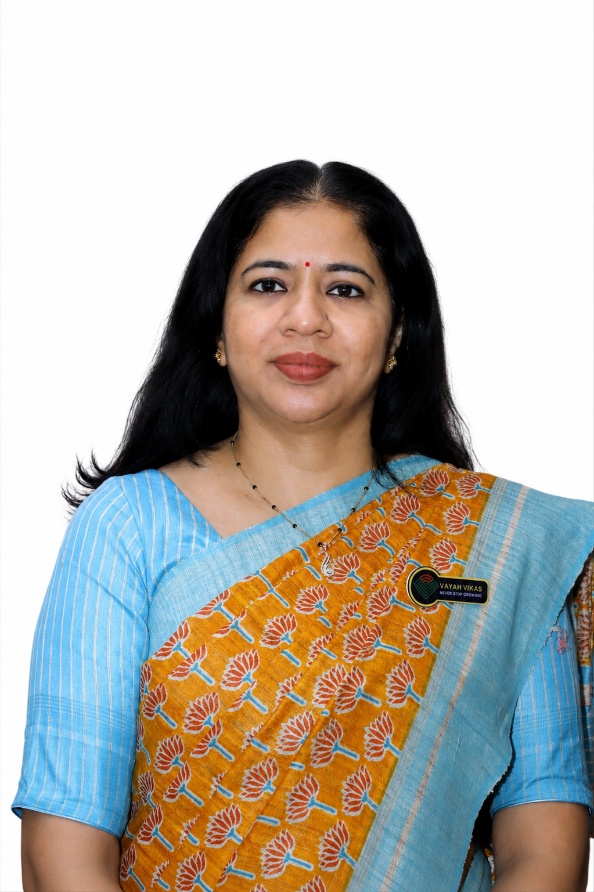
Pavithra Reddy — Vice President

Pavithra Reddy

Vice President

Gerontologist and Chief Operating Officer at Vayah Vikas with extensive experience spanning gerontology, healthy ageing, nonprofit leadership, and digital transformation.

Pavithra has led the design and scaling of community-based healthy ageing, caregiver support, age-friendly community, and workforce ageing initiatives across India, while contributing to ageing policy development with government stakeholders.

Passionately committed to advancing equity and dignity in ageing, her research focuses on social gerontology, older women, and creating innovative, evidence-based solutions that enable older adults to live healthier, more independent, and fulfilling lives.

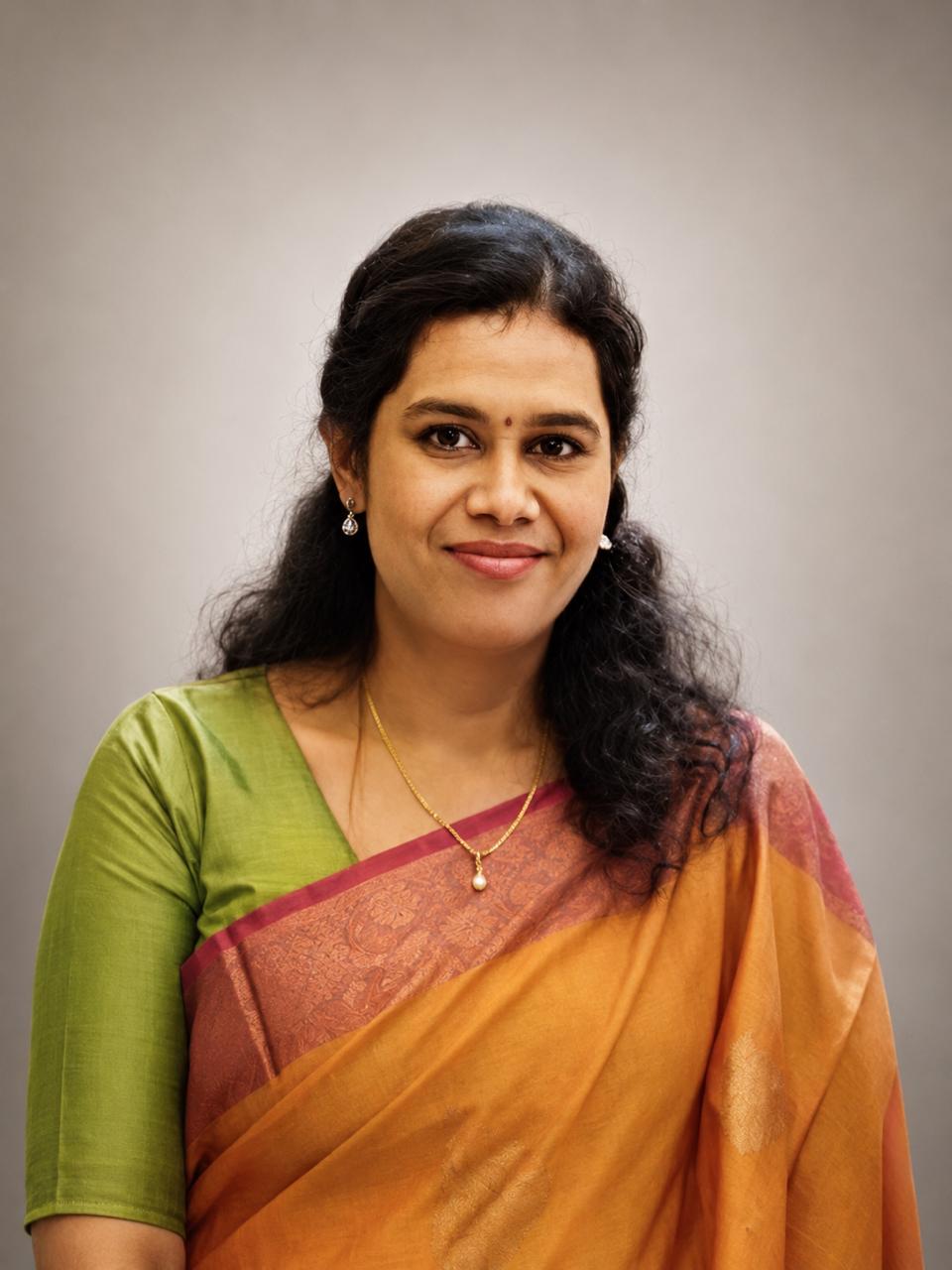
Ramani Sundaram — Secretary

Ramani Sundaram

Secretary

A dedicated neuroscience professional with deep expertise in dementia care, elder care project management, neuropsychiatric assessments, care planning, and team leadership.

Ramani has a proven track record in designing and managing active aging projects, along with experience in proposal writing, grant management, and fundraising.

She is also the Executive Director of the not-for-profit Dementia India Alliance, where she leads strategic development, advocacy efforts, and program execution - while facilitating high-quality dementia care services across the country.

Dr. Suramya Asthana — Joint Secretary

Dr. Suramya Asthana

Joint Secretary

PhD in Ageing Biology from the Indian Institute of Science (IISc) Bengaluru - with depth of research experience spanning cell biology, signalling and translational approaches to extend human healthspan.

As the Mazumdar-Shaw Longevity Fellow in Longevity India, her focus is on bridging cutting-edge ageing research with real-world impact through translational science, innovation, and entrepreneurship.

Suramya is an Editor for Longevity at ResearchHub, advancing open peer review and decentralized science. She is also Co-Managing Director for Nucleate India, fostering the next generation of biotech founders and innovators. She is deeply committed to open science, longevity biotech and space biology.

Joyce Kurian — Treasurer

Joyce Kurian

Treasurer

As Head – Partnerships & CRM at Vayah Vikas, she leads strategic partnerships, stakeholder engagement, and resource mobilization - to support the organisation’s mission of empowering older adults.

Joyce Mathew Kurian has significant experience in senior care, building collaborations with healthcare, academic, government, and social impact organisations.

Driven by an obsession for creating meaningful impact in the ageing ecosystem, she contributes to strategy, programme development, fundraising, and process improvement, and is passionate about creating significant collaborations that improve the quality of life of older adults.

Future vision

A collaborative platform for India’s longevity ecosystem

Future vision

The measure of AHA’s success will not be the size of the Association, but the strength of the ecosystem around it: proven models replicated, evidence reaching policy, caregiving recognised, dementia and cognitive health treated as central rather than peripheral.

The goal is a country where longer lives also mean healthier, more connected and more participatory ones — where the 15-year gap between lifespan and health span begins to close.

Every organisation adds to the collective voice

AHA is built from its members. If your work touches healthy ageing, longevity, elder care or dementia, there is a place for you in it.